

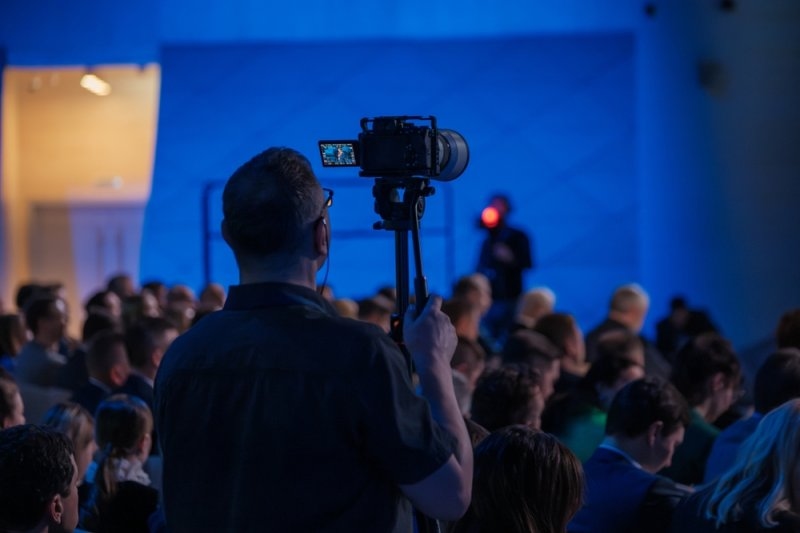
It's easy for event photographers to lose sight of what they need to shoot when the event goes by in the blink of an eye. An event photography checklist helps photographers keep track of all the moments that they need to document, from equipment to essential shots.
No matter if you're shooting a birthday, fundraiser, wedding reception, corporate event, or conference, event photography prep can help simplify everything.
Good photos are prepared in advance. Collect your information before the event and use it to produce a shooting plan. Let’s learn what should be on an event photography checklist:
Ask the organizer for the full schedule of events—guest arrivals, speeches, entertainment, presentations, meal times, award show, group photos, and closing.
This is one of the more fun parts of planning your event photography—you know what to plan to get the shot of! It can help you avoid wasting time stuck in one part of your event.
Here are 10 examples of event photography shot list ideas that you can add to your list (from a few specific shots to complete coverage). A very specific event photography shot list… but not too specific! Here's how to create an event photography shot list.
Must-have shots for event photography:
This list is in response to the question, “What photos should an event photographer take?” The exact answer will be different for each event, but your list should always consist of a combination of people, details, environment, and action.
Take a photo of the entire room empty while all the decor, signs, booths, and tables are clean and set up. Take a picture of the entrance, stage, tables, signage, decor, lighting, and everything else.
These photographs set the scene and can sometimes be helpful for organizers to use to promote the event. They also help give the final gallery a stronger start, as viewers are able to see what the space was like before it was busy.
People are often the focus of an event. Capture images of guests as they arrive, hug and greet friends, mingle, laugh and have a good time, join in on activities, and listen to performers or speakers.
Take some real-life shots instead of repeatedly directing people to pose. A mixture of staged group photographs and best candid shots provides diversity to the gallery and adds to the event's authenticity.
Special moments that cannot be recreated: 11. Your event photography shot list for these moments must include an award presentation, keynote address, first dance, product launch, the cutting of the cake, ribbon cutting, or special announcement.
Want to know “what shots an event photographer should take”? Focus on important figures, all the big events, the response of the crowd, and anything instructed by the organizer.
Equipment issues can blow a successful shoot out of the water in just a matter of minutes. Your event photography equipment checklist will include both your main gear and backups. A sample list of “what equipment does an event photographer need” is as follows:
The number of venues and circumstances varies; for example, an indoor gathering requires being shot using a different set of lenses and lighting than an outdoor daytime gathering. It is most critical to carry backups, as conditions may not allow for replacements of the equipment.
Discuss with the organizer prior to the event and discover who the key people are. Find out if there are particular guests, sponsors, items, decorations, or actions that need to be photographed.
This step improves event photography preparation because the event photographer and event team share the same expectations. It also helps facilitate a reworking of your event photography shot list if the time schedule shifts.
Good event photography preparation is more than just packing your camera bag. Pre-visit (or do some recon of) the venue, check the lighting, plan your shooting positions, and know where people will be standing or moving during the event.
You also need to know your access requirements, instructions on how to arrive or park, who to contact, expectations about dress, and how much flash is allowed, for example. These are the little things that can help you avoid a lot of hassle on the day.
No matter how thorough your checklist, it's impossible to capture every single moment. Keep your options open and think outside the frame.
On the shoot, remember to follow these event photography tips:
A good photographer wouldn't just check off a list. With the event photography checklist as a guide and your focus on the event, you'll have the ability to catch shots that never made it on the list.
After finishing, review your finished coverage against your event photography shot list. Be aware of every essential person, what they are doing, who and what detail is important, and what group shots and final moments have been shot. Whatever you think is important is probably covered. If anything important is still in the process, hold on a bit longer and don't pack your gear!
Download and back up the photos from the event as soon as possible after the event. Covering the photography prep, equipment, and shot list in this way is useful in assessing what can be improved for the next event. An event photography checklist is essential to playing more confidently and creating a gallery that flows and feels like it belongs.
Using a good event photography checklist will help you keep your focus and be prepared for whatever is ahead. Include event photography shot list ideas, event photography shot list templates, check your gear, work with the event organizers, and be ready to shoot candid event photography moments, and everything else you need to know about event photography so you can get the entire event covered.
Combining great event photography planning and preparation with a few event photography tips, you'll be sure to have amazing event images while being flexible enough to incorporate unexpected shots that keep the event gallery real.
An event photography checklist should include the schedule, key people, essential shots, venue information, group photos, candid interactions, gear, batteries, cards, lighting requirements, and backup plans. The list should be customized for the event and not the same each time.
Check the event schedule before you shoot and take notes of shots you can't recreate. Get there early, get in touch with the organizer, and get your spot before the important action happens. Keep your camera ready and look for the audience to help you time the shot.
They have their separate uses. Posed shots help with VIPs, team photos, sponsors, and formal groups, whereas candid shots may help capture more of the atmosphere and the people on the ground. Include both styles in your gallery rather than specializing.
Getting to an event 30 to 60 minutes early can be beneficial, although how early you should arrive depends on the event. Arriving early will give you an opportunity to take images of the venue, assess the lighting, set up your equipment, meet the organizer, and find out where everything is going to happen.
The full gallery reveals more than just the main event or speakers. It ought to tell the full story of what happened through the venue, guests, people of significance, motions, responses, candid interactions, and, in the end, closure. Mixing close-up, wide, medium, personal, and distance shots adds interest to the end results.
This content was created by AI